

Understanding TED and Graves’ Disease
TED and Graves’ disease are separate but related diseases.1,2
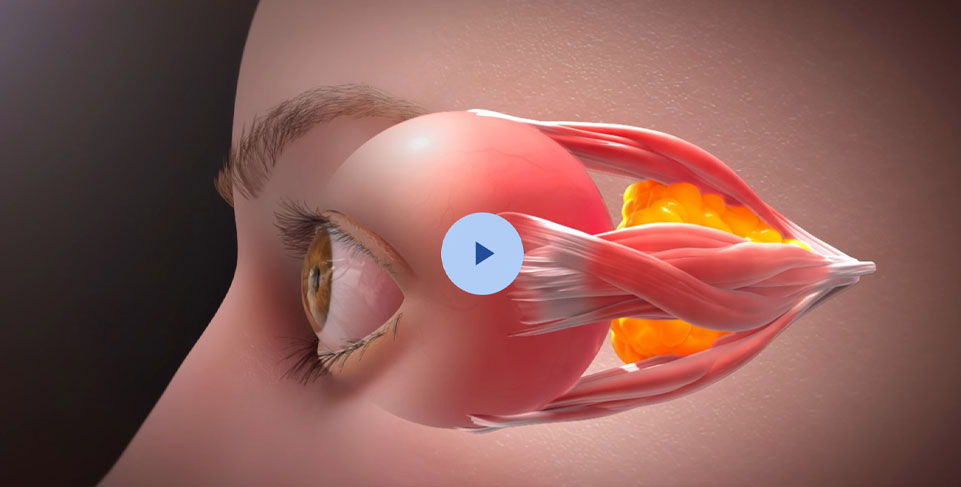
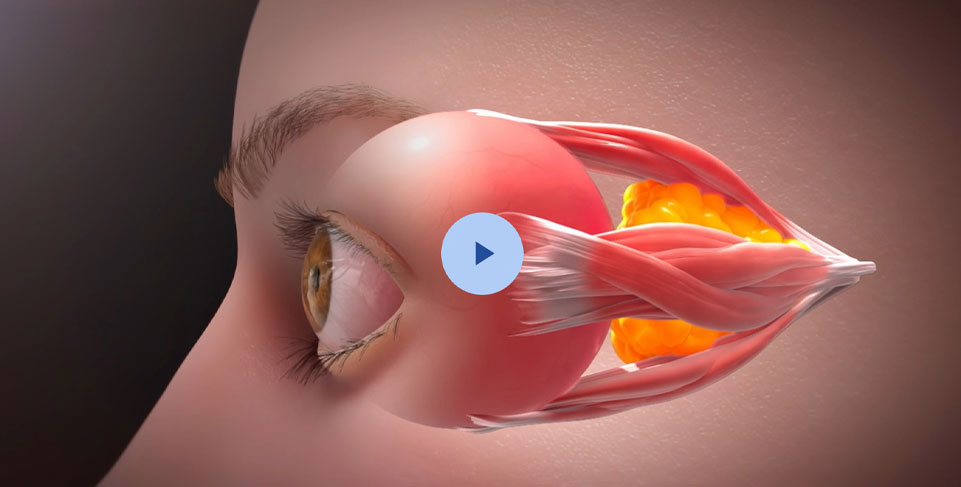
While Graves’ and TED are both autoimmune conditions, they impact the body differently.3 With TED, the body’s immune system attacks healthy muscle and fat tissue behind the eye.3 In Graves’ disease, the body’s immune system attacks the thyroid gland, causing it to become overactive and produce more thyroid hormone than the body needs.3


It is important to understand the similarities and differences between the two diseases.
A Summary of Some of the Similarities and Differences: 3,4,5,6
| Description | Thyroid Eye disease | Graves’ disease |
|---|---|---|
| Type of condition | Autoimmune disease | Autoimmune disease |
| Primary affected area | The tissue at the back of the eye | The thyroid gland |
| How the condition affects the body | Redness and swelling of the eye, known as inflammation | Overactive thyroid also known as hyperthyroidism |
| Common symptoms |
Eye issues including bulging, redness, soreness, double vision | Rapid heartbeat, weight loss, sweating, anxiety, fatigue |
| Causes | Body’s own immune system mistakenly attacks the eye | Body’s own immune system mistakenly attacks the thyroid gland |
| Risk factors | Graves’ disease, smoking, female sex/being female, age >40 years | Genetics, smoking, stress, female sex/being female |
| Diagnosis | Eye symptoms, scans, blood tests | Scans, blood tests |
| Prevalence (commonness) | Less common. Up to 40% of people with Graves’H disease1 may develop TED | More common. Leading to overactive thyroid |
The signs and symptoms of both thyroid eye disease and Graves' disease can be variable. If you are concerned you are experiencing medical symptoms of concern please seek professional medical evaluation.
-
References
- Ueland, HO, Ueland GÅ, Løvås K, et al. Novel inflammatory biomarkers in thyroid eye disease. Infl biomarkers in thyroid eye disease. 2022; 187(2):293-300
- Smith TJ, Hegedüs L. Graves’ disease. N Engl J Med. 2016;375(16):1552-1665
- British Thyroid Foundation. Your guide to thyroid eye disease. https://www.btf-thyroid.org/thyroid-eye-disease-leaflet. Accessed: April 1, 2025.
- NIH. Graves’ Eye Disease. https://www.nei.nih.gov/learn-about-eye-health/eye-conditions-and-diseases/graves-eye-disease. Accessed: April 1, 2025.
- Burch HB, Perros P, Bednarczuk T, et al. Management of thyroid eye disease: a Consensus Statement by the American Thyroid Association and the European Thyroid Association. Eur Thyroid J. 2022 Dec 8;11(6):e220189
- MayoClinic. Graves’ Disease. https://www.mayoclinic.org/diseases-conditions/graves-disease/symptoms-causes/syc-20356240. Accessed: April 1, 2025.
You Are Leaving This Website
You are leaving this patient disease awareness website and will be taken to an Amgen corporate website intended for a range of audiences.
For medical advice, contact your doctor. For medical information or to report side effects, please use the next page.
GBR-532-26-80004 February 2026.